To actively participate in the hands-on practice sessions in the afternoon (Track 2 and Track 3), please make sure you bring your own laptop and meet the following requirements:
Confirmed keynote speakers for the morning programme.
Software engineering has evolved over decades into a well-defined discipline with established practices for reliability, testing, design and maintenance, and it continues to improve as systems grow in scale and complexity. Research or science software engineering builds on these foundations but operates in a context where requirements shift with new discoveries, where code often embodies scientific models, and where correctness is tightly coupled to experiment and interpretation. RSE adds further challenges to the complexities of SE: code must adapt as science advances, experiments must be reproducible, data workflows can be immense, and performance and sustainability matter as much as correctness.
AI is now disruptive across many domains, and it is reshaping software engineering itself by changing how we write, test, optimise and reason about code. In this keynote we synthesize these trends through a clear quadrant framework comparing SE and RSE with their AI-supported counterparts, illustrating how AI assists development tasks, accelerates research pipelines, supports documentation and testing, and even helps generate scientific insight. Attendees will leave with a structured understanding of how AI is transforming research software engineering, what skills and practices are becoming more important, and how to actively shape a future where human expertise and AI capability work together.
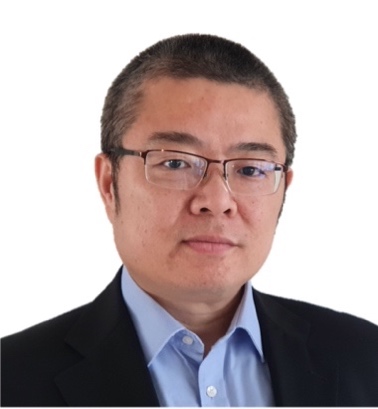
Professor Tekinerdogan is a computer scientist with over 25 years of experience in software/systems engineering and information technology. He earned both his MSc (1994) and PhD (2000) in Computer Science from the University of Twente, The Netherlands.
He has held academic positions at the University of Twente and Bilkent University, where he founded and led the Bilkent Software Engineering Group. He is currently a full professor and chair of the Information Technology group at Wageningen University. He has authored more than 400 peer-reviewed publications, edited multiple books, and led numerous national and international research and consultancy projects in domains such as consumer electronics, enterprise systems, automotive, critical infrastructures, cyber-physical systems, satellite systems, energy systems, precision farming, and more.
His expertise spans software and systems architecture, software product line engineering, cyber-physical systems, model-driven development, aspect-oriented software engineering, global software development, data science, and AI. He has extensive experience as an educator and industrial trainer, and has supervised many MSc and PhD students.
AI is changing every aspect of society. But change itself is not new: transformative technological shifts occur with increasing frequency. What matters is how we adapt to these developments and learn to make the most of them.
In this talk, Carlos shares experiences from the Netherlands eScience Center on using AI in research software engineering. He discusses concrete examples, practical tips to follow, and common pitfalls to avoid when integrating AI into research workflows.
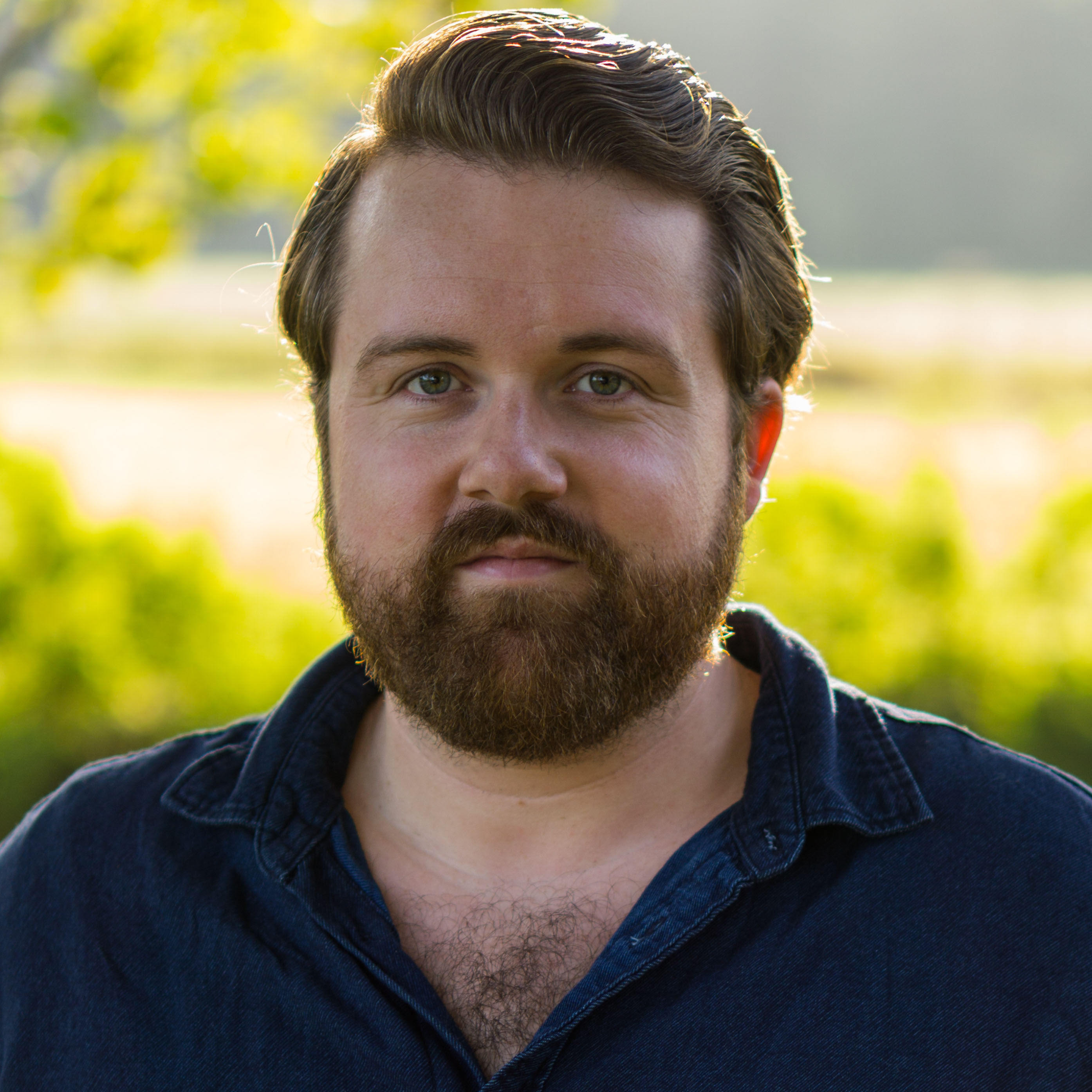
Carlos Martínez-Ortiz is a community manager at the Netherlands eScience Center. He has a background in computer science and is involved in various research software engineering initiatives. Through his work, he supports research communities in adopting best practices in software development, reproducibility, and the use of advanced digital technologies such as AI.
Real-world environments are dynamic: weather, lighting, terrain, and obstacles constantly change, making structural measurement difficult. Agriculture adds further complexity, such as seasonal changes, crop stages, and occlusions. In fruit orchards, key processes such as pruning, root pruning, flower thinning, and fruitlet thinning are vital for healthy tree growth and stable yields, but are currently not data-driven and rely heavily on experience and agronomic expertise.
To address this, imec has developed multi-sensor mapping technology that enables efficient, high-resolution 3D scanning of entire trees. Deep learning applied to 3D point clouds and hyperspectral images can systematically estimate parameters such as fruit-bearing capacity, flower count, shoot number, and disease pressure. The next challenge is integrating these parameters into digital twin technology to guide processes like automated spraying and robotic pruning.
OnePlanet Research Center envisions that advances in 3D sensor fusion, AI, and digital twinning will help overcome the complexities of agricultural environments by supporting systematic orchard research and intelligent farm management for the future.
Dr. Bastiaan Boom is Principal Member of Technical Staff and Lead of the ActiveAI group at OnePlanet Research Center. He earned his PhD from the University of Twente (2010) and completed a four-year postdoc at the University of Edinburgh (Fish4Knowledge project).
After seven years in industry at Cyclomedia, where he led a team in computer vision and point cloud recognition, he now heads the ActiveAI team of nine researchers supporting imec with AI solutions. Bastiaan is project lead for Autonomous Pruning & Digital Orchard, coordinating National Growth Fund initiatives (NextGen Hightech Handsfree Orchards) and EU projects (AIGreenBots) on sensing, AI, robotics, and VR in orchards. He has authored multiple journal and conference papers, including publications at CVPR, and holds several patents.
Modern scientific research relies heavily on software and information technologies for data processing, analysis, and experimental automation. Research software is not merely a supporting tool; it is a core part of research output, essential for reproducibility and open science. Yet, reusability is often hampered by deficiencies in quality and documentation.
Several research software quality models have been proposed in different communities, but adapting them to specific domains can be time-consuming and require significant training effort. In this talk, Zhiming introduces the Research Software Quality toolkit (RSQKit) being developed in the EU EVERSE project. He demonstrates its application in a Virtual Research Environment (VRE) to improve software quality across multiple levels: the core platform, domain-specific virtual labs, and Jupyter notebooks, developed in collaboration with EU ENVRI-HUB Next and LifeWatch.
Dr. Zhiming Zhao is an Associate Professor and Chair of the Multiscale Networked Systems (MNS) research group at the Informatics Institute of the University of Amsterdam. He leads the technical development of the Virtual Lab & Innovation Center (VLIC) within the European Research Infrastructure LifeWatch.
His research focuses on programming and control models for quality-critical systems on programmable infrastructures, including clouds, edges, and software-defined networks. Supported by various EU and Dutch projects, his team develops digital twin solutions, virtual research environments, and cloud automation tools addressing data and computational challenges in industrial innovation and big data infrastructures. He is a Senior Member of the IEEE and Managing Editor of the Journal of Cloud Computing.
In this talk, Bas van der Velden elaborates on the use of Artificial Intelligence (AI) for food safety. He discusses trends in food safety research and presents several use cases in which deep learning is used to keep our food system safe, working with chemical, biological, and image-based data.
dr.ir. Bas van der Velden is the Head of Data Science & AI at Wageningen Food Safety Research, where he leads a diverse, international team of researchers working on AI for chemical, biological, and image-based data. His team leads multiple work packages in European projects, and Bas is a member of the innovation subgroup of the European Food Safety Authority (EFSA) Advisory Group on Data.
Bas holds a PhD in Medical Image Analysis from Utrecht University. With over a decade of experience in deep learning and explainable AI, he helps translate complex models into actionable insights for researchers, policymakers, and industry partners.
Below is the schedule for the AI4RSE workshop.
All morning sessions take place in Room B063 (Leeuwenborch).
| Time | Session / Talk | Speaker / Facilitators | Notes |
|---|---|---|---|
| 08:30 – 09:00 | Coffee & Registration | — | Arrival, registration and informal networking before the workshop starts. |
| 09:00 – 09:15 | Opening and Introduction | Siamak Farshidi | Welcome, workshop objectives, and overview of the AI4RSE workshop program. |
| 09:15 – 09:45 | Beyond Automation: How AI is Transforming Research Software Engineering |
Prof. Bedir Tekinerdogan Information Technology Group, Wageningen University |
Introduction of the AI4RSE quadrant model and a research agenda for AI-augmented research software engineering. |
| 09:45 – 10:15 | eScience View on AI & RSE |
Dr. Carlos Martínez-Ortiz Netherlands eScience Center |
Experiences and lessons learned applying AI in research projects from an eScience perspective. |
| 10:15 – 10:30 | Coffee Break | — | Refreshments and informal discussions. |
| 10:30 – 11:00 | Challenges and Opportunities in Creating a Digital Orchard |
Dr. Bastiaan Boom ActiveAI Group, OnePlanet Research Center (imec) |
AI, sensor fusion and digital twins for next-generation orchard management. |
| 11:00 – 11:30 | Enhancing Research Software Quality in a Virtual Research Environment |
Dr. Zhiming Zhao University of Amsterdam |
Research Software Quality toolkit (RSQKit) and its use in Virtual Research Environments. |
| 11:30 – 12:00 | AI for Food Safety |
dr.ir. Bas van der Velden Wageningen Food Safety Research |
AI applications in chemical, biological, and image-based food safety monitoring. |
| 12:00 – 12:30 | Questionnaire and Group Setup | Önder Babur | Survey participants, form thematic groups, and assign facilitators for the afternoon tracks. |
| 12:30 – 13:30 | Lunch Break & Networking | — | Lunch and informal networking across groups and communities. |
Parallel interactive sessions in three tracks, followed by a joint plenary and closing.
| Time | Session / Talk | Track facilitators | Location | Notes |
|---|---|---|---|---|
| 13:30 – 15:00 | Parallel Interactive Sessions (3 Tracks) | Participants choose one of three sessions, each including pitch preparation. | ||
| Track 1 – AI4RSE: Organization & Management |
Siamak Farshidi, Ayalew Kassahun, Önder Babur |
B0075 | Organizational and managerial aspects of AI4RSE and research software practices. | |
| Track 2 – Using AI4RSE Tools |
Ebo Kwabena Bennin Tahir Abbas |
B0078 | Introduction and guided use of tools and metrics for assessing research software. | |
| Track 3 – Vibe Coding |
Carlos Martínez-Ortiz, Mateusz Kuzak, Faruk Diblen |
B0073 | Exploration of AI-assisted and collaborative coding workflows. | |
| 15:00 – 15:30 | Coffee Break | — | B0075 | Informal networking and preparation for plenary pitches. |
| 15:30 – 16:00 | Plenary Session – Group Pitches & Discussion | All track facilitators | B0075 | Short pitches from each track and joint discussion of outcomes and recommendations. |
| 16:00 – 16:15 | Closing & Next Steps | Ebo Kwabena Bennin | B0075 | Closing remarks, reflections, and call for follow-up collaboration. |